
Clean Air Zones help cities fight pollution and encourage healthier living. In these areas, certain vehicles that pollute more may face restrictions to help improve air quality.
Birmingham is tackling its air pollution problems, largely caused by vehicle emissions, by introducing a CAZ. This plan is designed to make the city a cleaner and safer place for both residents and visitors.
In this article, we’ll discuss why Birmingham introduced the CAZ, what it involves, and what it means for people who live, work, or travel in the city.
Objectives of Birmingham CAZ
The Birmingham Clean Air Zone focuses on two key areas: environmental sustainability and public health.
Its goals are to reduce vehicle pollutants and improve air quality in busy parts of the city.
1. Environmental Goals
The main environmental aim of the CAZ is to reduce nitrogen dioxide (NO2) levels in the city center. NO2, often emitted from older and diesel-powered vehicles, contributes to air pollution.
2. Public Health Benefits
Better air quality directly improves public health.
Lower pollution levels can reduce respiratory and cardiovascular diseases, leading to fewer health problems, reduced medical costs, and a healthier community overall.
3. Benefits for Residents and Visitors
For residents, the CAZ means cleaner air and a less polluted living environment, enhancing their quality of life.
Visitors will also enjoy these improvements, finding Birmingham a cleaner, more inviting place.
This shift towards sustainability not only boosts Birmingham’s attractiveness for tourism and business but also fosters further investment and development.
Is There a ULEZ Charge in Birmingham?
No, Birmingham does not support the ULEZ charge. Instead, the city uses the Clean Air Zone (CAZ) as its main strategy for managing vehicle emissions and reducing congestion, similar to London’s emission and congestion control measures.
The Birmingham CAZ combines the functions of London’s ULEZ, congestion zone, and Low Emission Zone (LEZ).
This means it’s the main way Birmingham controls vehicle emissions and manages traffic. There are no extra fees for emission or congestion control outside of what the CAZ covers.
This streamlined approach helps improve air quality and the urban environment without adding extra financial burdens on residents and visitors.
What Vehicles Will Be Charged for Entering Birmingham Clean Air Zone?
In the Birmingham CAZ, certain vehicles that don’t meet specific emission standards will be charged.
Here’s a breakdown of which vehicles are affected and how the charges are determined
Types of Vehicles Charged
- Private Cars: Petrol cars need to meet Euro 4 emission standards, and diesel cars must meet Euro 6 standards to avoid charges.
- Vans and Light Goods Vehicles (LGVs): Petrol vans and LGVs should comply with Euro 4 standards, and diesel ones with Euro 6 standards.
- Buses, Coaches, and Heavy Goods Vehicles (HGVs): These need to meet Euro VI emission standards.
- Taxis and Private Hire Vehicles: Petrol versions should meet Euro 4 standards, and diesel versions must comply with Euro 6 standards.
- Minibuses: Diesel minibuses require Euro 6 standards, and petrol minibuses must meet Euro 4 standards.
- Euro 4 for Petrol Vehicles: Typically, vehicles registered from January 2006 onwards meet this standard.
- Euro 6 for Diesel Vehicles: Vehicles usually comply if registered from September 2015.
- Euro VI for Buses, Coaches, and HGVs: This applies to vehicles registered from January 2014 onwards.
How You Can Tell If You Have Entered the Birmingham Clean Air Zone
Knowing when you’ve entered the Birmingham Clean Air Zone (CAZ) is essential to avoid unexpected charges.
The city has installed clear signage to guide drivers about the CAZ boundaries. Here’s what to look out for:
1. Advance Signs
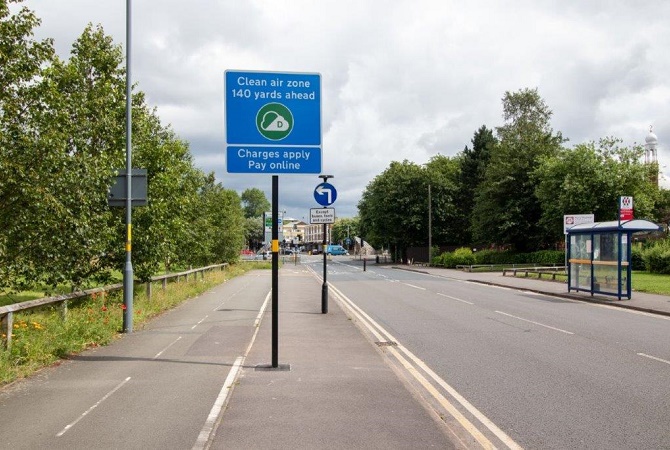
Before you enter the CAZ, you’ll see advance warning signs that display messages like “Clean Air Zone Ahead” and show how far the zone is.
2. Inside the Zone Signs
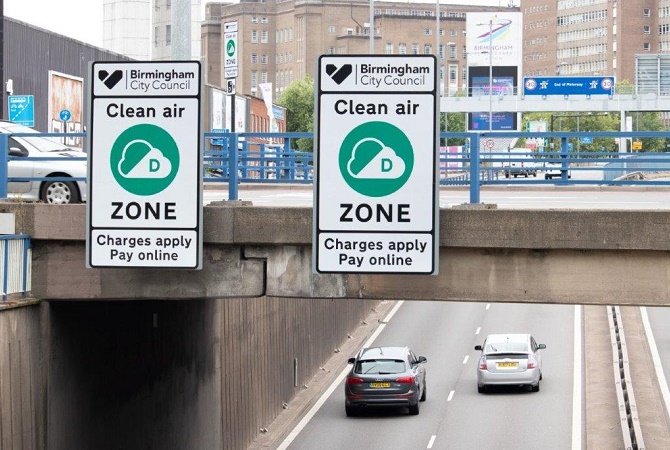
Once inside the CAZ, you’ll notice signs that say ” Clean Air Zone” at entry points.
Throughout the zone, more signs remind you that you are still within the CAZ. These often feature the CAZ logo.
3. Exiting the Zone Signs
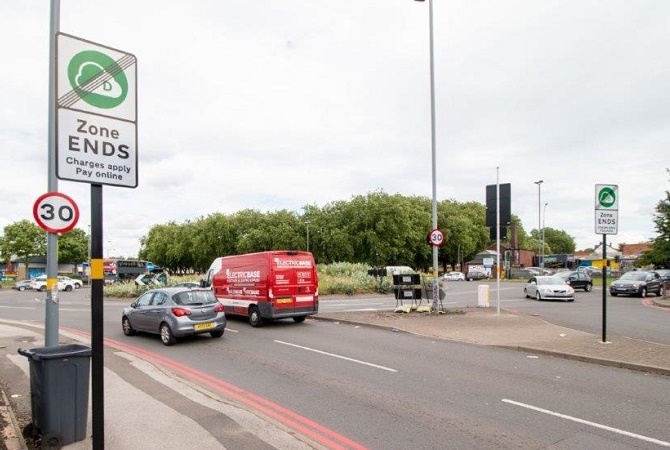
When leaving the CAZ, you’ll see signs that tells you are no longer subject to charges.
These include signs stating “Zone ends” at all exits.
What Area Does the Clean Air Zone Cover in Birmingham?
The Birmingham Clean Air Zone (CAZ) covers the area inside the A4540 Middleway Ring Road, but it’s important to note that the Middleway itself is not included in the CAZ.
This means that only the zones within this boundary are affected by the CAZ regulations and charges.
The CAZ operates continuously, every day of the year, to consistently help improve air quality.
- Boundary: The area inside the A4540 Middleway Ring Road.
- Exclusion: The Middleway Ring Road itself is not included in the CAZ.
- Operational Hours: The CAZ is operational 24/7, all year round.
For a clear understanding of the CAZ boundaries, you can refer to the map below.
This map provides detailed visuals of the exact limits and offers more information about the zone.
How Much Will Drivers Be Charged for Entering the Zone?
The charges for entering the Birmingham CAZ depend on the vehicle type.
Below are the charge rates for various vehicles and details:
| Vehicle Type | Daily Charge | Emission Standards Required |
|---|---|---|
| Private Cars and Vans (LGVs) | £8 | Euro 4 (petrol) or Euro 6 (diesel) |
| Taxis and Private Hire Vehicles | £8 | Same as private cars and vans |
| Buses, Coaches, and HGVs | £50 | Euro VI |
The charges in the Birmingham CAZ are consistent throughout the day, with no variations for peak or off-peak hours. This means:
- The daily charge is applied 24 hours a day, every day of the year.
- There are no higher charges during peak travel times or reduced rates during quieter times.
Step-by-Step Guide to Paying the Birmingham CAZ Charge by Phone
Here’s a step-by-step guide on how to pay the Birmingham CAZ charge by phone:
- Before you call, have your vehicle registration number and payment details handy.
- Dial 0300 029 8888. The lines are open Monday to Friday, from 8 am to 4:30 pm.
- When prompted, give your vehicle registration number to check if a charge is due for entering the CAZ.
- The operator will tell you the charge amount based on your vehicle type.
- Follow the operator’s instructions to complete your payment. You’ll need to provide your payment details over the phone.
- Make sure to get a confirmation reference number for your records. This is crucial for any future disputes or issues regarding your payment.
Penalty Charges
- Penalty Charge: If you fail to pay the CAZ charge, you will receive a penalty charge notice of £120.
- Reduced Charge: This penalty can be reduced to £60 if you pay within 14 days of receiving the notice.
How to Prepare for the Birmingham CAZ
Here are some practical steps and alternative transportation options to help you comply with the new regulations:
Tips for Preparation
- Check Your Vehicle’s Emission Standards: First, find out if your vehicle meets the required emission standards to enter the CAZ without charges. You can check this information on your vehicle registration document or by using online tools from vehicle manufacturers.
- Consider Upgrading Your Vehicle: If your vehicle doesn’t meet the standards, consider upgrading to a newer, compliant model. This could mean choosing a more fuel-efficient vehicle or switching to a fully electric vehicle.
- Plan Your Routes: Learn the boundaries of the CAZ and plan your travel routes to avoid entering the zone unnecessarily if your vehicle isn’t compliant.
- Register for Exemptions or Discounts: Determine if you qualify for any exemptions or discounts. Some vehicles, like those used by emergency services or modified for disability access, may be exempt from charges.
Alternative Transportation Methods
- Public Transportation: Make use of Birmingham’s comprehensive public transport system, which includes buses, trams, and trains. These can be a convenient and eco-friendly alternative to driving.
- Cycling and Walking: For shorter journeys, consider cycling or walking. Birmingham is improving its cycling infrastructure, making it a safer and more convenient option.
- Car Sharing: Look into car-sharing schemes. Sharing rides can reduce the number of vehicles on the road, cut emissions, and share the costs of travel.
- Park and Ride: Use park-and-ride facilities located on the outskirts of Birmingham. Park your car and continue into the city center via public transport to avoid CAZ charges.
- Telecommuting: If possible, work from home on some days to decrease your travel frequency into the CAZ.
Final Words
This guide has explored the Birmingham Clean Air Zone, covering its goals, and operations.
We’ve looked at environmental objectives, vehicle charges, zone boundaries, and how to adapt to these changes through exemptions and payment procedures.
As Birmingham aims for a cleaner future, the CAZ is crucial for reducing pollution and enhancing quality of life.