
London continues to tackle air pollution with ULEZ, and it has helped clean the air in many ways.
Now, other cities, including Bristol, are following suit with similar programs.
Bristol has introduced its own version, called the Bristol Clean Air Zone, designed to meet the city’s specific environmental needs.
But despite Bristol’s Air Zone Initiative, do you still need to pay for ULEZ in the city?
This article will explain whether residents need to pay for ULEZ in Bristol City. We aim to provide clear and helpful information about these new air quality measures and whether they apply to you.
Do I Have to Pay ULEZ in Bristol?
The simple answer is no; the ULEZ from London isn’t in effect in Bristol.
However, Bristol hasn’t ignored the issue of emissions. The city has launched its own environmental program, called the Bristol Clean Air Zone.
Like London’s ULEZ, Bristol’s CAZ aims to improve air quality, which in turn benefits public health and the environment.
The initiative focuses on reducing air pollution by limiting access to the most polluting vehicles in specific parts of the city, helping to ensure cleaner air for both residents and visitors.
What You Should Know About the Bristol Air Zone
The Bristol Air Zone is a key strategy to tackle air pollution in the city centre.
Its main goal is to cut down on harmful emissions, improving both air quality and public health.
There is a charge that specifically targets older gasoline and diesel vehicles, which are known to release more pollutants.
The Bristol Clean Air Zone operates 24/7 throughout the year and covers the city centre.
It uses Automatic Number Plate Recognition (ANPR) cameras to check that all vehicles entering the area meet the emission standards set by the Bristol City Council.
This system, which started in November 2022, is important for controlling vehicle access and keeping the air clean.
A daily fee discourages the use of older, more polluting vehicles.
According to the City Council, about 71% of vehicles entering the zone already comply with these standards and don’t have to pay the charge.
Those who don’t pay when needed may receive a penalty charge notice.
This approach ensures that the vehicles contributing most to air pollution are charged, promoting a healthier environment.
What Vehicles Will Be Charged And Exempted In Bristol Air Zone?
The Bristol Air Zone Charge specifically targets older vehicles that contribute heavily to air pollution. Here’s how the charges apply based on vehicle type and criteria:
1. Types of Vehicles and Criteria for Charges
- Private Petrol and Diesel Cars: Cars that don’t meet Euro 4 standards for petrol and Euro 6 standards for diesel will face charges. Typically, this affects gasoline cars older than 2006 and diesel cars older than 2015.
- Taxis and Light Goods Vehicles (under 3.5 tonnes): These vehicles will be charged if they fail to meet the same emission standards. This mainly includes older models of taxis and vans that are likely to emit more pollutants.
2. Exempt Vehicles
- Electric Vehicles: These are exempt from the charge due to their zero tailpipe emissions.
- Disabled Passenger Tax Class and Disabled Tax Class Vehicles: These vehicles are also exempt, ensuring accessibility for all individuals.
- Military Vehicles: Given their specific use and governmental ownership, military vehicles are not charged.
- Historic Vehicles: Vehicles over 40 years old are exempt as they are considered of historical significance and are typically used less frequently.
- Certain Types of Agricultural Vehicles: These are often exempt due to their limited use within urban areas and specific functional necessities.
How Much Is The Bristol Air Zone Charge?
The daily charges differ depending on the vehicle type, reflecting their potential environmental impact.
Here’s a breakdown of the daily charges for various vehicle types in the Bristol CAZ:
| Vehicle Type | Bristol CAZ Daily Charge |
|---|---|
| Private Passenger Car (Petrol or Diesel) | £9 |
| Taxi | £9 |
| Light Goods Vehicle (LGV) | £9 |
| Heavy Goods Vehicle (HGV) | £100 |
| Bus or Coach | £100 |
How to Pay Bristol Clean Air Zone Charges
If your vehicle doesn’t meet the required emissions standards, here’s how you can pay the Clean Air Zone charges:
- Visit the payment portal here
- Select “Pay a charge for a vehicle.” Click ‘Continue’.
- Input your vehicle registration number. Specify if it’s registered in the UK or not, then continue.
- Check your vehicle’s details on the next page and confirm them.
- Follow further prompts to finalise your payment.
You can also call the Clean Air Zone support line at 0300 029 8888 (operational Monday-Friday: 8am to 7pm, Saturday: 8am to 2pm).
Tip: Avoid penalties by paying up to six days before or up to six days after entering the zone. Always ensure your vehicle details are accurate to prevent errors.
How You Can Tell If You Have Entered the Bristol Air Zone
If you’re not familiar with the area or if your vehicle might not meet emission standards, you need to understand how to identify when you’ve entered Bristol’s Clean Air Zone.
Here’s how you can tell:
1. Advance Warning Signs
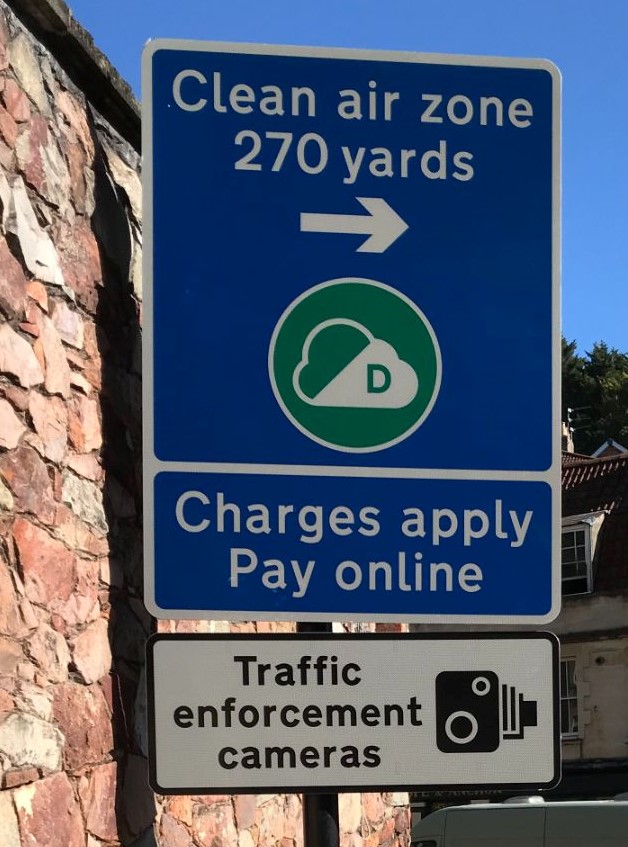
These signs are placed along roads leading to the zone.
They alert drivers that they’re nearing the CAZ, giving them time to choose an alternative route if their vehicle doesn’t meet the standards.
These signs are usually paired with camera enforcement signs to show that the area is monitored.
2. Direction Signs
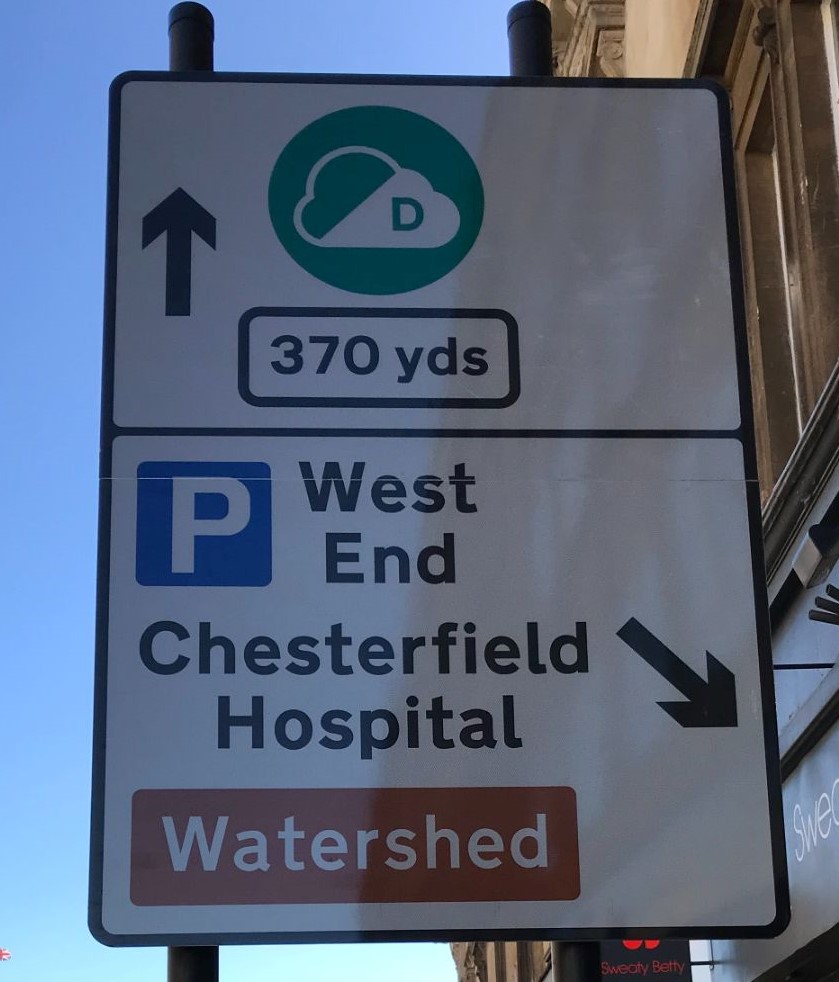
Located near the boundaries of the zone, these signs either complement or replace advance warning signs.
They help guide drivers towards or around the CAZ, making it easier for those who wish to avoid entering.
3. Entry Signs

These are placed where the CAZ starts. They have a CAZ symbol, a letter ‘D’ within a cloud, indicating entry into a Type D Clean Air Zone.
Signs indicating camera enforcement are also present here, informing drivers that their vehicle’s compliance is being checked.
4. Exit Signs
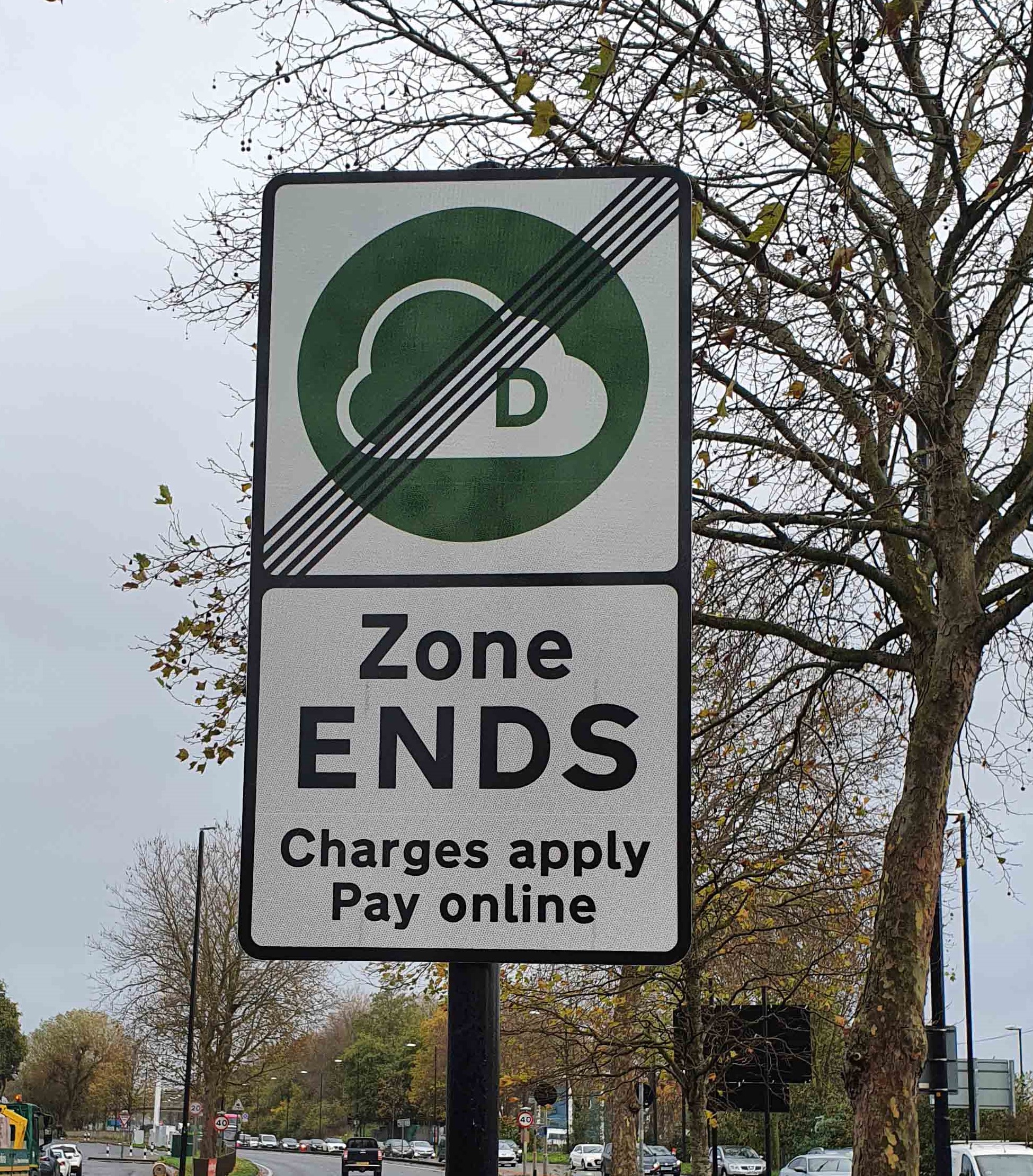
As you leave the CAZ, you’ll see exit signs.
These indicate that you are moving out of the regulated area, marking the end of the zone’s specific emission and vehicle checks.
5. Repeater Signs
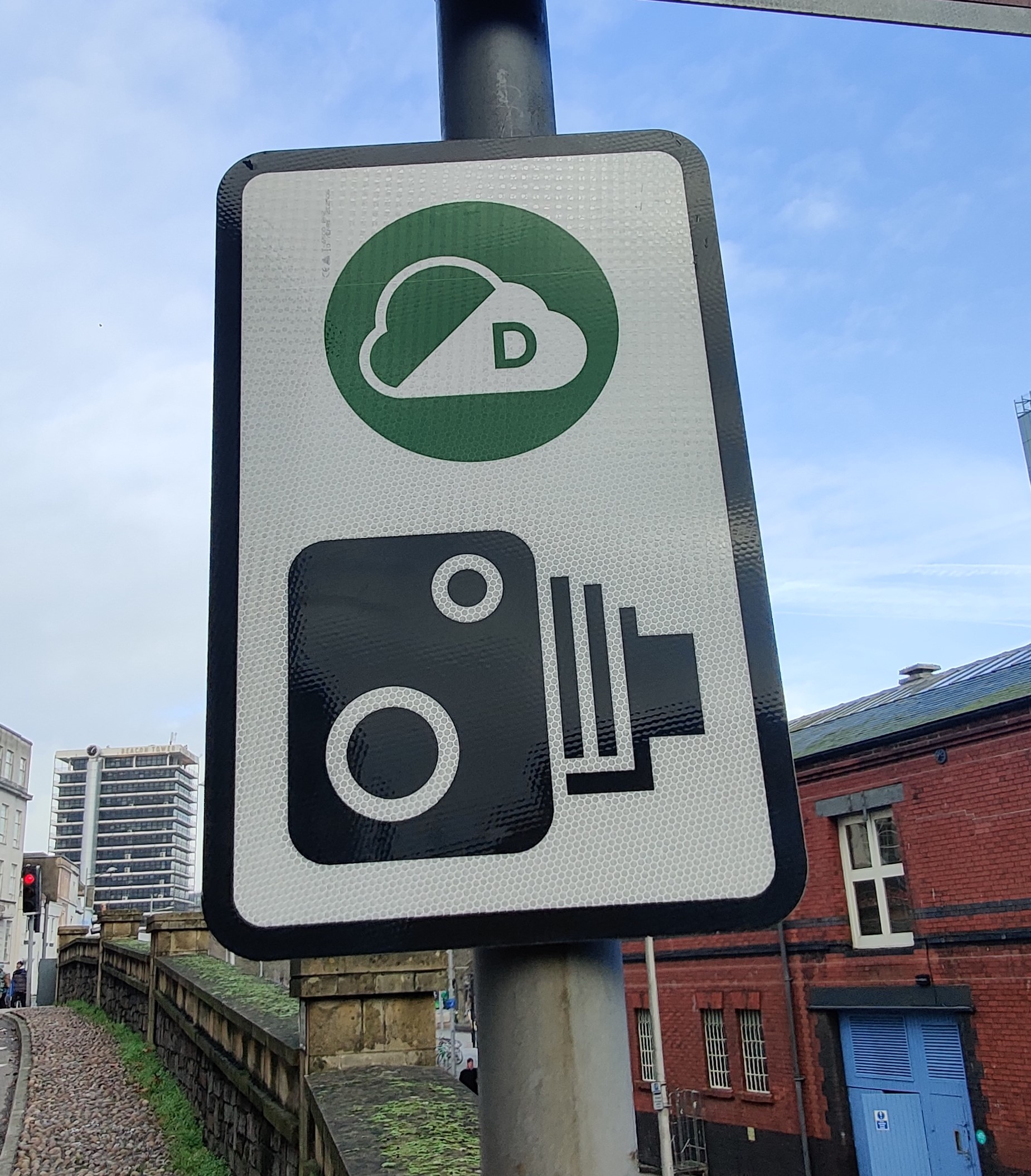
Inside the CAZ, repeater signs remind you that you’re within a zone that monitors emissions.
These also emphasise ongoing camera enforcement, ensuring drivers remain aware and compliant.
How to Check If Your Vehicle Is Compliant with Bristol’s Clean Air Zone
To determine if your vehicle meets the requirements for Bristol’s Clean Air Zone and whether you’ll face any charges, you can use the government’s official checking tool.
Here’s a quick step-by-step guide:
- Open your browser and visit the Checker tool page.
- Click on the option “Check a vehicle” to begin.
- Type in your vehicle’s registration number (number plate) and continue.
- Verify the details of your vehicle to ensure they are correct.
- Continue to the next step, where the tool will display whether your vehicle meets the emissions standards for Bristol’s Clean Air Zone.
Conclusion
Driving within Bristol now comes with air zone charges, aimed at reducing pollution and encouraging greener transport.
It’s important for all drivers, both locals and visitors, to understand these rules to avoid fines and contribute positively to our city’s air quality.
Bristol’s move to implement a Clean Air Zone is a big step towards cleaner air. This effort needs everyone’s support and involvement.